The Benefits Of Double Glazing
Double glazing is a crucial enhancement for trade professionals aiming to offer their clients superior window solutions.
Read the StoryOriel windows are one of the most striking architectural features you can add to a home. Designed to project from the wall without touching the ground, they instantly transform flat elevations into sculptural, light-filled spaces. Whether designed into a new extension or as a modern interpretation of a traditional bay, oriel windows combine practicality, luxury, and design impact.
It is glass technology and development over the years that have made Oriel windows even more popular. Structural Glass is the key component of modern oriel windows giving them their lovely shape with safety, security, strength and internal comfort.
An oriel window is a projecting glazed box or bay that extends outward from a building’s wall but does not reach the ground. Supported by cantilevered brackets, structural steel, or hidden framing, the design creates a “floating” effect — visually dramatic from outside and beautifully light from within.
Traditionally, oriel windows were used in historic buildings to provide extra space and outlook on upper floors. Modern versions reinterpret the idea using large panes of structural glazing, slim aluminium framing, and frameless corner details. Now Oriel windows are used on any floor and especially where there may be little light in a particular area of the property.
Today, oriel windows appear in:
Modern extensions and new builds
Upper floors of houses or apartments
Stairwells, home offices, and feature walls
Commercial or mixed-use buildings
At Glideline, we design and manufacture bespoke aluminium and structural glass oriel windows that combine architectural precision with performance and durability.
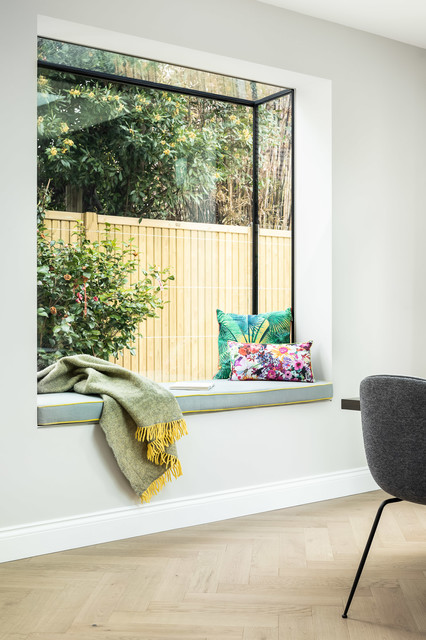
A projecting oriel creates valuable additional floor area . As mentioned, they are widely used as built in seating often with storage beneath. You can also create oriel windows as a reading nook, or compact workspace. Even a modest projection of 600mm can make a small room feel more open and usable.
Because oriel windows are glazed on multiple sides, they bring in more daylight than a flat window. Light enters from several angles throughout the day, improving interior brightness and reducing the need for artificial lighting. Additionally in autumn and winter months, they delay the need for artificial lighting.
3. Architectural Impact
Oriel windows instantly elevate the appearance of any home. From the outside, they add depth and dimension to otherwise plain elevation. Inside, they become a focal point and very soon a favourite space.
Glideline oriel windows often feature frameless corners, structural glass, and thinsysten aluminium trims for a refined, contemporary look.
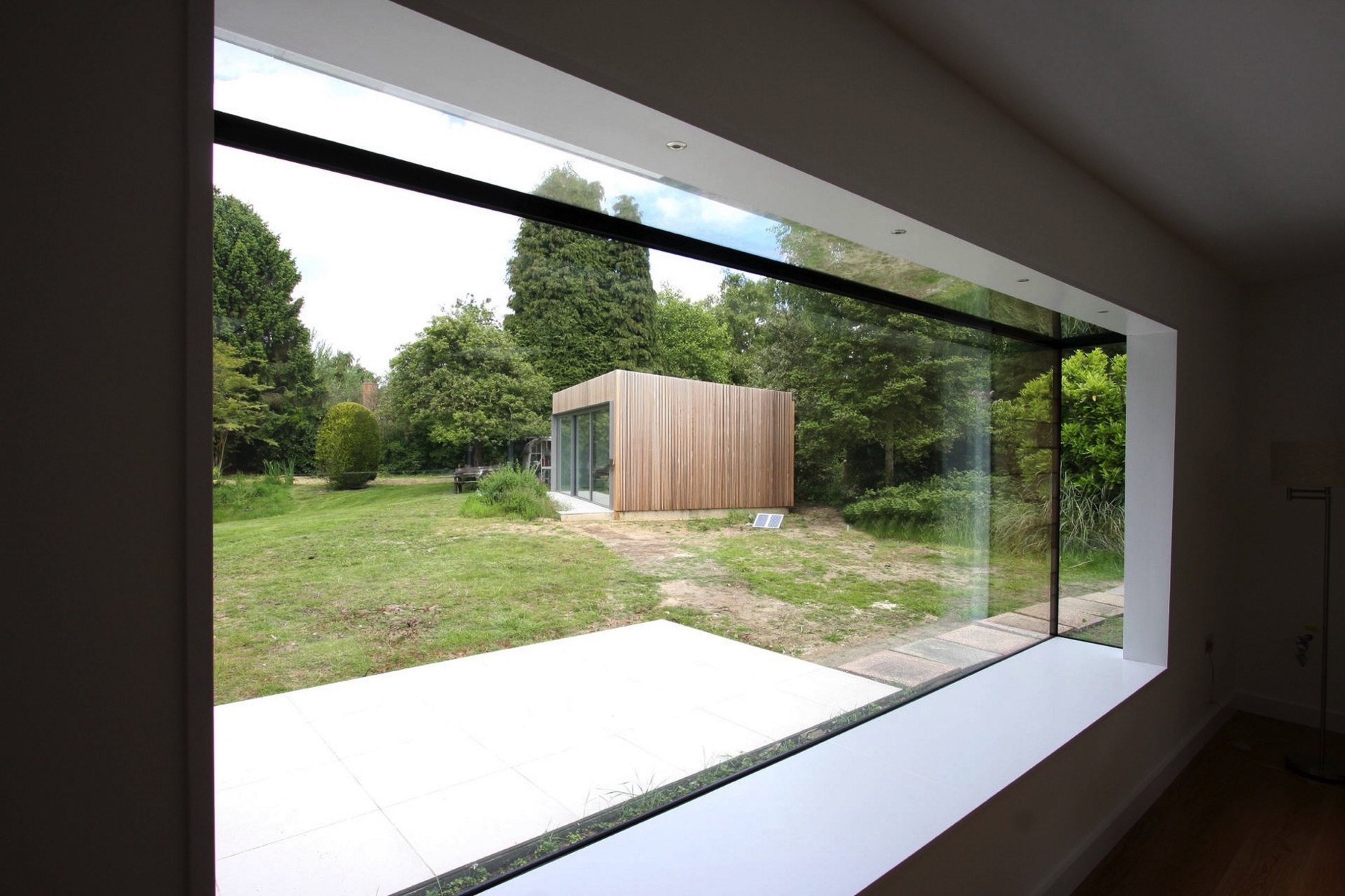
With three or more glazed sides, oriel windows offer panoramic views compared with traditional flat windows. When used on upper floors, they provide clear sightlines over gardens or surrounding landscapes.
Architecturally designed homes stand out on the property market. Adding an oriel window can increase desirability and resale value, particularly when incorporated into a well-considered extension or new build.
There is no off-the-shelf oriel window system. Each one is bespoke and must be designed around the structure. When we manufacture your bespoke Oriel Windows, each products gives us full control over:
Frame colour and internal finish
· Size and projection depth
Glazing specification
Seat or cill detail
Shading, privacy glass, solar control glass or enhanced security.
Although often associated with contemporary architecture, oriel windows can complement period or heritage properties when designed sympathetically. The concept dates back centuries and oriel windows are not a new invention. Instead, modern aluminium creates a more refined version using thermally insulated aluminium and the highest performance safety glass.

The cost of an oriel window depends on its size, materials, glazing type, and structural support requirements.
Window Type | Size (approx.) | Estimated Cost |
Small projecting box | 1.2m x 1.2m | £3,500–£5,000 |
Medium feature oriel | 1.8m x 1.8m | £6,000–£8,000 |
Large corner oriel | 2.4m x 2.4m+ r | £9,000–£12,000+ |
Installation costs depend on complexity. Because most oriel windows require a steel or aluminium support frame and specialist fitting, expect professional installation to add a minimum of 50% to the supply cost, and also depending how much work is required at the property. These are guide prices only. Buying power, profit margins, installation costs and warranty support all varies as well as regional price variations.
Other factors affecting price include:
Structural steel and bracket design
Access equipment or craning
Solar control or specialist glass
Frameless corner detailing, full structural or slimline corner
Internal finishes such as timber seat boards or plaster reveals
While not a budget option, oriel windows deliver exceptional design value, creating an architectural centrepiece that often defines the entire project.
In many cases, small oriel windows fall under Permitted Development Rights, but not always. Planning requirements depend on projection depth, location, and property type.
If the projection is under 150mm from the wall face, planning permission is usually not required.
Larger projections, especially on the front elevation or within 2m of a boundary, often do require approval.
In conservation areas, listed buildings, or flats, planning permission is almost always necessary.
Your oriel window must also meet Building Regulations, including:
Part A: Structural integrity and load-bearing support
Part L: Thermal performance
Part K: Safety glass and protection against falling
Part B: Fire safety (especially near boundaries)
At Glideline, we work closely with architects and builders to ensure each oriel window design complies with UK standards and current Building Regulations.
An oriel window is as much an engineering feature as an aesthetic one. Proper planning ensures it looks stunning and performs flawlessly.
1. Structural Support
Most oriel windows are cantilevered and rely on concealed steel or aluminium frames tied into the building structure. Early consultation with a structural engineer is essential.
2. Orientation and Light
North-facing oriels maximise daylight without overheating. South or west orientations may require solar control glass. Integral glass blinds aren’t usually available unless the oriel window is a fully framed version.
3. Privacy and Overlooking
Corner oriels may overlook neighbouring properties. Frosted, obscure, or screen-printed glass helps maintain privacy.
4. Maintenance Access
Consider how the external glass will be cleaned. Frameless designs may need specialist cleaning poles or easy external access.
5. Ventilation
Most oriel windows are fixed units. Opening elements are usually not possible without visible frames. Plan for nearby opening windows or roof vents to maintain airflow.
6. Interior Integration
Internally, the projecting base can be finished as a seat, shelf, or display area. Consider insulation beneath for comfort.
A Bay Window and an Oriel Window are similar in that they project outwards from the main elevation of a home. However, bay windows are usually supported by the structure itself, alongside bay poles and posts (although rarely designed to be structural).
An oriel window will use brackets, supports or corbels and are fitted on ground or upper floors.
This guide explains everything you need to know — what oriel windows are, how much they cost, when planning permission is needed, and what to consider before installing one in your home.
Feature | Oriel Window | Bay Window |
Structure | Suspended or cantilevered | Built into foundation |
Location | Typically, upper floors or feature façades | Usually ground floor |
Projection | Floating, no ground support | Supported by wall or brickwork |
Design Style | Modern, minimalist | Traditional, domestic |
Materials | Aluminium, glass, steel | Timber, uPVC, aluminium |
Function | Feature glazing, light and space | Seating or additional floor area |
In short, a bay window is built from the ground up, while an oriel window is suspended or projected from the wall — more technically complex but visually lighter and more modern.
Glideline Oriel Window Systems
At Glideline, we design and manufacture bespoke oriel windows using premium aluminium profiles and structural glass. Our systems integrate seamlessly with contemporary façades, frameless corners, and minimalist detailing.
Every project is fully supported with:
CAD drawings and load calculations
Structural advice and specification support
UK manufacturing and quality assurance
Matching sliding and frameless window systems
Whether part of a large extension or a single feature window, Glideline offers the technical expertise and manufacturing precision required for these complex architectural features.

Can oriel windows open?
Typically, no. Most oriel windows are fixed for structural and weathering reasons. Opening windows or ventilation needs should be considered at the planning stage.
How far can an oriel window project?
Projections usually range between 400mm and 900mm, depending on structure and design. Contact us for more information if you need larger windows.
Do they need foundations?
No. They are supported by concealed steel or aluminium frames fixed to the main building structure.
Are oriel windows safe?
Yes. They use laminated or other approved safety glass and are engineered to meet UK Building Regulations.
Can I retrofit one into an existing home?
Yes, but you’ll need structural assessment and possibly planning permission.
Oriel windows combine architecture, engineering, and design in one feature. They maximise light, add functional space, and deliver striking aesthetics inside and out. For homeowners, they represent an investment in both lifestyle and property value.
At Glideline, we manufacture oriel and structural glazing systems that meet the highest standards of performance and design precision.
Homeowners: Contact Glideline today for advice, cost guidance, and to discuss your bespoke oriel window project.
Trade professionals: Partner with us to access technical drawings, installation support, and premium UK-made systems for your next architectural glazing project.
Double glazing is a crucial enhancement for trade professionals aiming to offer their clients superior window solutions.
Read the Story
When it comes to choosing windows and doors for your clients, energy efficiency is a crucial consideration. Energy-efficient windows and … Continued
Read the Story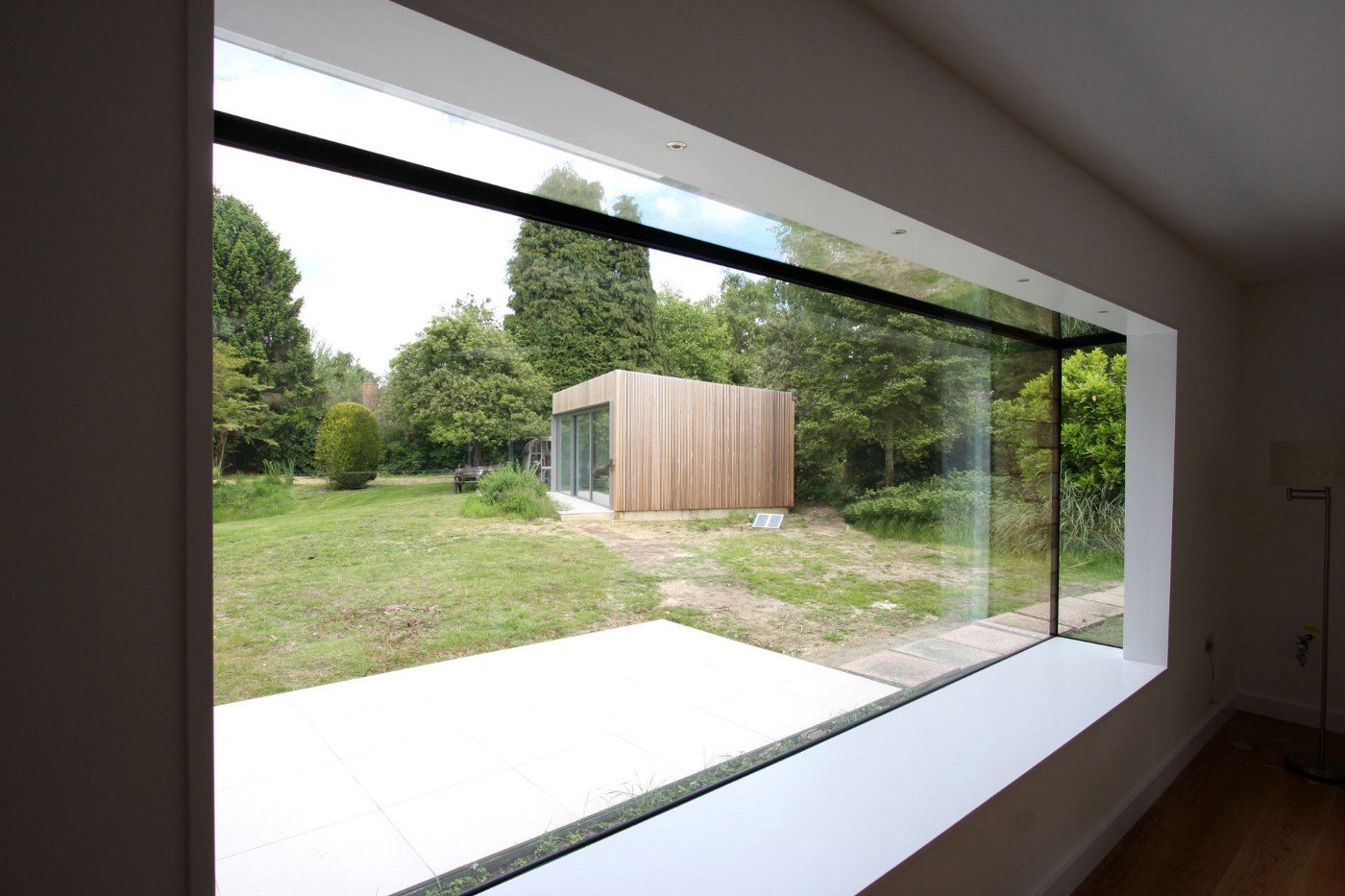
Frameless windows, also known as frameless glazing or frameless glass windows, offer a contemporary and stylish alternative to traditional windows. … Continued
Read the Story